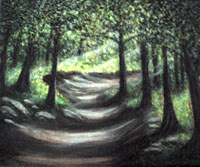
Showing posts with label art projects. Show all posts

Monday, April 27, 2026

Learning Fun, Yearly Review, Planning Ahead


For many families, the homeschool year begins winding down in April and May. This can be a perfect time to review the achievements of the past year.

It’s also a good time to revisit the learning goals you had hoped to accomplish this year, but never quite got around to.

That’s okay! They can carry over to the upcoming homeschool year or be part of summer fun activities.

Summer provides ample opportunities to learn, to explore, observe, relax, and recharge.

The most learning occurs when children (or adults) immerse themselves in the things that interest them the most.

Allow plenty of free time for children to stretch their wings, try new hobbies, or pursue a multitude of interests in the weeks to come.

7 Days of Learning, 50 Activities

For 7 days of learning and 50+ activities, try these activities outdoors. You can do one activity per day, or all the activities each day, or variations of the activities every day, all year, rain or shine! And learning will naturally occur, each and every day.

1. Language Arts:
• Go on “Story Walks” along nature trails, in local parks, or in library gardens.
• Create your own “Story Walk” in your backyard or neighborhood green space.
• Read favorite books while swinging or relaxing in the branches of a tree.
• Sketch the scenes and vistas surrounding you, then describe why they're special to you.
• Read signs and plaques describing local areas of interest.
• Discuss things you had never noticed or experienced, and why they’re interesting.
• Write stories or essays about the places you visit and the things you see this week.

2. Social Studies:
• Create a map of your community parks, neighborhood green spaces, nature trails.
• Each day, draw the route you take, using different colors to indicate different days and areas visited.
• Describe landmarks encountered, such as gates or sign posts, trailheads or information displays, boulders or stone formations, waterfalls or creeks, bridges or boardwalks, monuments or memorials, etc.
• Learn the difference between “natural landmarks” and “cultural landmarks.”
• Research these landmark terms: geological landmarks, biological landmarks, architecture landmarks, archaeological landmarks, and see how they differ.
• Discuss how your local landmarks relate to the history of your town or community.
• Photograph, draw, or sketch these landmarks, and write about their history and importance to your area.

3. Science:
• Use field guides and binoculars to identify plants; wildflowers; trees; birds; insects; animals; urban wildlife; rivers, streams, or pond life; ocean, beach, or shoreline life, etc.
• Learn which birds, butterflies, or wildflowers are most common in your backyard or local parks.
• Plant flowers that attract birds, hummingbirds, butterflies, and bees to your own backyard.
• Build bird feeders, birdhouses, butterfly houses, bat houses, or natural habitats that will draw beneficial animals to your location.
• Plan dozens of outdoor activities by using books such as Outdoor Science Experiments; Backyard Science and Discovery; Nature Smarts; Outdoor Science Projects; and Exploring Nature.
• Observe the sky and clouds overhead. What type of cloud formations do you see? What type of weather might they bring? How has the location of the sun changed since you left your house this morning? Draw or describe these in your Science Journal.
• Write about your favorite places in your Science Journal or notebook, describing why those areas felt special to you, and add photos or drawings of them, too.

4. Math:
• Consult step counters, pedometers, or fitness trackers to tally up total steps and distance of nature walks each day.
• Determine the time spent on each walk, and if using a fitness tracker, determine the number of calories burned per time and distance.
• For comparisons, run around a track or trail, and compare that to walking the same track or trail, in terms of steps, time, distance, and calories burned.
• Create a chart in your Math Journal or notebook, illustrating the daily steps, distance, time, and calories burned.
• Using the map from Social Studies, calculate the distance or miles between your house and the park, nature trail, creek, local store, downtown square, etc.
• Using the construction ideas from Science, calculate the size, dimensions, openings, slats, etc. for birdhouses, feeders, bat houses, and other outdoor science projects.
• Formulate and draw blueprints or plans for constructing these projects, based upon your calculations, then take photos of the completed projects.

5. Life Skills:
• Use decision-making skills on where to walk or explore the outdoors each day, deciding what items to take along, what the weather will be like, and what to wear each day.
• Use critical-thinking skills on how to reach the places you want to go, the best routes to take, the most-interesting paths or trails to follow, the many things you can learn.
• Observe and note everything around you – the good and the not-so-good – and discuss why it's important to observe your surroundings.
• Obey safety rules and “rules of the road” – watching traffic, even on nature trails, exercising caution at crosswalks, and paying attention to traffic signals.
• Be respectful of other walkers, hikers, bicyclists, horse trail riders, and others who are outside to enjoy a day in nature.
• Be careful and aware of the inhabitants of nature, from insects and snakes, to bears and wolves, to alligators and sharks – it’s their home, too, so maintain safe distances.
• Clean up after picnics and science projects, and leave no trace behind – in other words: “Take only memories, leave only footprints.”

6. Art:
• Draw detailed maps of trails or places visited each day.
• Paint or draw colorful sketches of butterflies on flowers, birds in trees, fish in ponds, waves along the shoreline.
• Try urban sketches of landscapers working in the park, tables and umbrellas in an outdoor café, shopkeepers opening their doors, delivery trucks outside a storefront.
• Sketch a strolling musician, a plein air art event in the park, artwork in an art gallery, iron or concrete sculptures in the park.
• Learn about famous and not-so-famous artists, painters, sculptors in your town and the artwork they created.
• Try copying one of the artist’s artwork or creations, then try it again, in your own style.
• Take photos of all the artistic views you see on your walks, or outdoors in your own backyard, then sketch, paint, or create them from your photos.

7. Music:
• Listen – intently – to Nature’s Music: the birds singing to each other, the wind in the trees, crickets chirping in tall grasses, dry leaves rustling along the sidewalk, gravel crunching beneath your feet, the creek gurgling over rocks, waves crashing against the shoreline.
• Replicate these sounds of Nature’s Music the best you can, singing like the birds, whooshing like the wind, chirping like the crickets, gurgling like the creek.
• Create your own songs about nature, composing the lyrics and melody to express your feelings about being outside.
• Dance to the music from a concert in the park.
• Learn about the local musicians in your area and try to see their performances.
• Visit music stores and look at new music or instruments you’d like to learn to play.
• Perform a musical or create a play based upon your experiences in nature this week.

Remember to explore nature often and enjoy the great outdoors in the weeks to come!

Happy homeschooling!


Sunday, November 30, 2025

Fun Art Project + Holiday Keepsake


The holiday season can be a busy time! But it's actually a perfect time to paint or sketch your memories or special activities!

Documenting special events in a sketchbook will create a keepsake that you can look back upon throughout the years to come.

This easy watercolor sketch shown above could evoke memories of a walk through the woods, looking for a Christmas tree. Or a trip to your local Christmas tree lot.

To see how this painting was done, see the quick 5-minute video on my YouTube channel, Misty Glow Studio, here: Easy Festive Trees.

Take a few minutes to do quick sketches or paintings of the simple joys of the season, as you go through the month of December. They will bring more brightness and meaning to each day!

Have a beautiful holiday this year!

Happy homeschooling!


Wednesday, October 29, 2025

Back-on-Track Homeschooling


Sometimes things happen that get us off-track, or we go through times of discouragement, despair, or even grief.

In my case, it was grief, as we recently suffered the loss of our family pet – our dog, Shannon. It’s been over a month now, and I’m still trying to come to terms with the loss.

But as I was taking a walk this morning, the beautiful fall leaves seemed to pull me out of my sadness. I remembered how our dog loved rolling in a big pile of autumn leaves, and the memory made me smile.

When I’m not working, writing, researching, or learning, I try to unwind by painting with watercolors, oils, or acrylics.

So I collected a few colorful leaves, took them back to my art studio, and commenced painting with watercolors. Soon, I was lost in the joy of painting and in the sweet memories of our dog playing in autumn leaves.

Now I feel like I’m coming through the other side of grief, and I can embrace the light and happiness again.

This might not be the best homeschool lesson, but it’s a lesson we all can learn from and can find useful in life:

Light does, indeed, always follow the dark.
And we can, indeed, find joy again, even in the midst of sadness or discouragement.

So, if you experience doubt, discouragement, or even despair when homeschooling, or during the course of a challenging day, take a break.

Take your children for a walk through nature. Be amazed by its beauty and mystery. Collect leaves, rocks, and most of all – precious memories!

Then take your collections – including those precious memories – back home and paint them, sketch them, craft with them, treasure them.

The beauty of nature, and time spent together, is often all that’s needed to create the best learning environment.

If interested in seeing a short video on overcoming grief through a simple painting like the one above, you can view it on my YouTube channel at MistyGlowStudio.com.

Happy homeschooling!


Monday, June 30, 2025

Easy Textured Paintings for Fun

"Easy Textured Paintings" Having fun creating textured paintings this month! See how to create depth and dimension with modeling paste. Then add colorful details for unique interest!

Also, you'll see a sneak peak of my Home Art Studio!

The painting tutorial and sneak peak can be viewed on my YouTube channel, Misty Glow Studio, at this link: Misty Glow Studio.

Use this summer to create more, try new hobbies, finetune special skills, and simply de-stress through art and creativity.

Have a great summer!

Tuesday, December 31, 2024

New Year + New Interests = New Learning

It’s another New Year with New Opportunities for New Interests and New Learning! Take time to enjoy the things that truly interest you this year, as a family and individually. We learn the most when we enjoy what we're doing, regardless of age. So, rather than focusing on the things we "should" be doing, let's focus on the things we "could" be doing!

Here’s a few thoughts to keep in mind as you begin your New Year:

1. “Imagination is more important than knowledge,” said Albert Einstein. He felt that imagination opened up an entire world of possibilities. He believed that imagination was a major factor in scientific research. How do you use your imagination? You can imagine a make-believe world, imagine a new world, imagine a new story, new song, new artwork, new adventures, new ideas. It’s all possible, because you have imagination! Imagine and create new things this year!

2. “Creativity is intelligence having fun,” Albert Einstein said. When you are having fun creating things, you are using your intelligence. Create clay objects, create wire sculptures, create twirling mobiles, create with construction kits, create a building, create a model, create art, create whatever interests you. As a result, you’ll be using your intelligence, creating, learning, and having fun!

3. “The mind is not a vessel to be filled but a fire to be kindled,” said Plutarch, a Greek philosopher. By kindling a fire or sparking an idea in your mind, you are filled with excitement, curiosity, new interests, and new learning! When an idea excites or interests you, learning naturally occurs. This is because you are inspired and motivated to learn all you can about it. Be excited and curious, and you'll naturally learn more!

4. “Curiosity is the wick in the candle of learning,” observed writer William Arthur Ward. Imagine this: Without a wick, a candle can’t burn very well. Without curiosity, one can’t learn very well. Find ways to spark your own curiosity by asking questions like: “What if? How? Why? Who? When? Where?” Regardless of the topics you might currently be studying, be curious about them. Ask more questions! Go further! Learn more!

5. “Ask questions and you will gain new knowledge,” many have observed. If the tower you built collapsed, ask why and how you can keep it from collapsing the next time. If the clay sculpture you created didn’t turn out as expected, ask how you might improve it next time. If the story you wrote isn’t as exciting as you’d hoped, ask what characters or situations could liven it up. If this week’s history lesson, or math lesson, or science experiment is confusing or dull, ask what activities could make the lessons more exciting, more real, more fun, more clear. When you ask yourself, or others, you will find answers, every day and every week!

Remember to Explore! Experiment! Imagine! Create! Read! Write! Play! Build! Ask! Seek! Research! Be Curious! Be Innovative! Be Adventurous!

Resolve to make your New Year an exciting one filled with fun, imaginative, creative learning!

If interested in seeing my Nature-Inspired Paintings, please visit:

My Website: MistyGlowStudio.com

My Etsy shop: Etsy.com/Shop/MistyGlowStudio

My YouTube channel: YouTube.com/MistyGlowStudio

Happy homeschooling every week of this New Year!

Monday, September 30, 2024

31 Learning Ideas + Art Fun

Inktober art fun -- and learning fun -- is here! If you’re not familiar with Inktober, it’s a challenge to improve one’s drawing skills. As the name implies, it’s drawing with ink each day in October, following 31 specific Inktober prompts. (You can quickly find the prompts by entering "Inktober 2024" online.)

You can also create your own Inktober prompts, and find loads of learning ideas through them, too.

If drawing with ink is too messy or intimidating, use whatever medium works for each of your children, be it crayon, pencil, marker, watercolor paint, etc.

Sketching each day is a great way to create a daily art habit that results in fun, joy, and a sense of accomplishment for everyone.

Plus, many educational ideas can be gleaned from the daily drawing prompts, as well.

For instance, Inktober prompts for October 2024 include topics such as Backpack, Discover, Hike, Horizon, Journal, Rhinoceros, Expedition, Scarecrow, Violin, Landmark.

As children sketch these topics, think of the educational ideas that can grow from them!

Here are a several learning ideas:

Using the “Backpack” drawing prompt, what “educational materials” might be inside the Backpack your children sketch? A Math Book? Draw a Math Book along with the Backpack. Then, from this idea, have fun with Math -- such as Online Math Games, or play Math Board Games, or engage in Mental Math Challenges with each other. What other learning ideas might be inside that Backpack?

With the “Discover” Inktober prompt, your children might draw a picture of something new they Discovered recently, thereby sketching and capturing that new knowledge on paper. Or maybe they’d want to draw an illustration of a Discovery made by explorers or inventors. This could lead to a world of learning and perhaps even encourage them to try their own inventions.

The “Hike” drawing prompt could take children anywhere in the world. This could involve educational subjects such as Geography and Social Studies (hiking to different areas, learning about mountains and forests or different cultures). Plus Math and Science skills could be practiced, by using logic to map out the time required for making the Hike, along with math calculations for determining the distance covered in the Hike.

With the “Expedition” prompt, research “Famous Expeditions” or “Historic Expeditions” (see Historical Expeditions). These are full of learning ideas for Social Studies, Geography, History, Science, Math, and more. Or plan the logistics of your own Expedition as field trips or day trips in your area. Then sketch your local Expeditions and discuss how much you learn through these trips.

For drawing prompts like “Rhinoceros” see photos of Rhinos online, read any of the many books about Rhinos, and learn about why some species are endangered. Go on an Expedition or field trip to your local zoo to see the rhinoceros and learn about their habitat, savannas, and grasslands. Make sketches of their environment, too, or sketches of any other animals or areas in the zoo.

Whether using the specific Inktober prompts – or using 31 or more of your own family’s ideas – imagine the numeours ways you can expand learning opportunities, simply based upon the fun, engaging activity of drawing, sketching, and creating!

It’s a form of daily learning that your children will enjoy and always remember! And imagine how much fun and learning your children would have if you created prompts like this for each day of every month!

It’s so enjoyable that I've set up my own Art Studio (see Misty Glow Studio) for embracing art inspiration and experimenting with creativity. Perhaps your children can, too!

If interested in seeing my Nature-Inspired Paintings, please visit:

My Website: MistyGlowStudio.com

My Etsy shop: Etsy.com/Shop/MistyGlowStudio

My YouTube channel: YouTube.com/MistyGlowStudio

Happy homeschooling!


Monday, October 9, 2023

Monday Homeschool + Weekly Learning Ideas

What do we do on Monday when our weeks become overly busy or we face unexpected difficulties?

Some weeks, everything flows smoothly. Other weeks, things are more challenging.

Life doesn’t always go smoothly. This, in itself, is a good homeschool lesson. Having the ability to cope, to be flexible, to change directions, to adjust, to laugh at life’s lemons and to smile at simple joys – these are skills that make life and homeschool easier.

Yet, we still have to Do Something on Monday when facing a busy week. What do we do when we haven’t had time to think of activities or lesson plans?

What Do I Do Monday? is a book by John Holt, who has provided momentous ideas on education and learning. Mr. Holt was a homeschool pioneer, whose thoughts, beliefs, and writings on homeschooling and unschooling were ahead of his times.

Prior to writing numerous books on how children learn (and how they fail), John was a school teacher. But as a teacher, his focus was primarily on observing learning processes in children, rather than forcing a curriculum on them. As a result, his views often conflicted with those of school administrators.

So John turned his attention to helping parents and teachers. He shared first-hand experiences, insight, and details on children actively engaged in learning. He spent years with students and with families, closely observing how children learned best, then documenting and sharing his findings.

Some of John’s books include How Children Fail, How Children Learn, the previously mentioned What Do I Do Monday?, Freedom and Beyond, and others. His books can be found in libraries or online, and are especially inspirational to homeschooling and unschooling families.

Here are some learning ideas and quotes, courtesy of John Holt:

* “I believe that we learn best when we, not others, are deciding what we are going to try to learn, and when, and how, and for what reasons or purposes.” – John Holt

* Ask your children: “What would YOU like to do Monday?” If they can’t think of anything, try a 10-minute brainstorming session on what could be interesting, new, different, fun, etc. Then allow them to decide what they'd like to learn, and when and how, and give them the freedom to pursue those ideas this week.

* Make lists of favorite things during the day, the weeks, and in the months to come. Keep a running list in a notebook or journal. Encourage everyone in the family to keep his or her own list. Then review your lists for learning ideas each week.

* Examples: Here are some examples of "favorite things" from John Holt.

1. Places you like. These can be big places, or they can be little places, and you can like them for different reasons. Put them on your list, as many as you can think of, then learn more about those places.

2. People you’d like to know. Jot down the names of people who interest you, then learn more about them. They can be people from the past, people in the news today, people in your community, or even ancestors in your family.

3. Books you’d like to read. One favorite book can lead to another. Keep a list of books you’d like to read online or check out from the library. Write down favorite authors, too, and read other books they’ve written.

4. Paintings, sculptures, or other artwork. Keep a running list of art projects or techniques you want to try. Learn about different art movements or styles, such as Cubism, Pointillism, Futurism, Pop Art, etc., and try your hand at them.

5. Things you like to do. These can be trivial (simple) or not so trivial (more complex). Ideas could include cutting-and-pasting paper shapes, making castles from boxes, building structures with construction kits, writing skits or plays to perform, learning to play an instrument, making doll clothes, building a bookshelf, creating a computer program, etc.

In just these 5 ideas listed above, there could be weeks of learning ideas, hands-on activities, and new knowledge and skills gained through them.

Tip: An “Idea Jar” is an alternative, or a complement, to list-making. Have kids jot ideas on paper, then cut them apart, fold them up, and drop them into the Idea Jar. Each Monday, have them draw a few ideas from the jar, and there’s your learning ideas for the week!

Continue adding to the jar or to your lists as often as possible. Then you'll always have learning ideas at your fingertips each Monday!

Happy homeschooling!


Wednesday, August 16, 2023

40+ STEM and STEAM Activities

Create your own STEM Academy! We hear a lot about STEM School or STEM Academy or STEAM Projects.

STEM stands for Science, Technology, Engineering, Math.

STEAM includes Art, so it's Science, Technology, Engineering, Arts, Math.

Here are 40+ STEM and STEAM Activities to start your own STEM Academy!

Note: If you keep Lesson Logs, these activities fall under Science, Math, Technology, Language Arts, Reading, Writing, Social Studies, History, Arts, Research Skills, and Life Skills. Take the ideas and run with them!

40+ STEAM and STEM Activities with links to projects:

* Bubble Flute (Click here)
* Rainbow Colors Experiment (Click here)
* Musical Glass Xylophone (Click here)
* Kite Creation (Click here)
* Bridge Building (Click here)
* Skyscraper Construction (Click here)
* Dome Building Project (Click here)
* Miniature Furniture Creations (Click here)
* Sailboat Creations (Click here)
* Snack Pulley Project (Click here)
* Solar Race Cars (Click here)
* Solar Leaf + Art Projects (Click here)
* Battery Potato Clock (Click here)
* Radio from Bottle (Click here)
* Motor Construction (Click here)
* Tiny Dancers Creation (Click here)
* Magic Wand Creation (Click here)
* Spectroscope Construction (Click here)
* Coding Card Game (Click here)
* Coding with Hotwheels (Click here)
* Coding Unplugged Activities (Click here)
* Flappy Bird Coding Game (Click here)
* Food Color Fireworks (Click here)
* Color Separation Experiment (Click here)
* Slippery Slime Creations (Click here)
* Glow-in-the-Dark Slime (Click here)
* Glitter Slime (Click here)
* Modeling Clay (Click here)
* Glue from Milk (Click here)
* Colorful Candy Crystals (Click here)
* Ice Cream in a Bag (Click here)
* Soda Bottle Explosion (Click here)
* Volcano Variations (Click here)
* String Art Creations (Click here)
* Math Art Projects (Click here)
* Math LEGO Tessellations (Click here)
* 3D Art Tessellations (Click here)
* Marble Course Creations (Click here)
* LEGO Maze (Click here)
* Colorful Cardboard Maze (Click here)
* Math Infinity Fun (Click here)
* Magic Squares Math Practice (Click here)

Remember to discuss and review the projects together. Take photos and record the experiments and activities. Have kids write descriptions of their experiments and their thoughts on them.

Brainstorm ways to build upon the activities or create variations of them. Then plan future projects for more STEM and STEAM fun and learning!

Happy homeschooling!


Thursday, October 27, 2022

Weekly Lessons for All Grade Levels

Here are some Lesson Plan Ideas for this week, including Nature Journaling and Math in Nature.

Language Arts

- Why Nature Journaling works: "The long-time industrialized approach, the so-called factory model of schooling, has failed many.... Nature journaling, by helping learners become observant or immersed in, and reflective on, the world around them, sets the stage for lifelong self-learning from primary sources.... It incorporates sciences, local social and natural history, math, language, art, and physical education into one, integrated practice." (Clare Walker Leslie, from Keeping a Nature Journal).

- Read about the learning workshops based on Keeping a Nature Journal by author Clare Walker Leslie.

- See examples of Nature Journaling from the book entitled My Nature Journal: A Personal Nature Guide for Young People.

- Create a unique, artistically inspired Nature Journal of your own.

- Books on Nature Journaling: My Nature Journal: A Personal Nature Guide for Young People by Adrienne Olmstead. Keeping a Nature Journal by Clare Walker Leslie and Charles Roth. Nature Log Kids: A Kid's Journal to Record Their Nature Experiences by Deanna Brandt.

- As you write about and sketch scenes from Nature, immerse yourselves in Nature activities, such as rock collecting, leaf collages, nature scavenger hunts, inspecting animal tracks, insects, plants, and pond life. After sketching and investigating, notice how children begin seeing their world differently and more clearly.

- Journal writing activities: Have children regularly compose poems or songs based on some of their Nature sketches. Have them create imaginative stories revolving around topics inspired by their Nature Journals, such as a bird's travels, a rabbit's adventures, a tree's history, a flower's hopes, a seed's beginnings and future, a stream's journey, etc.

Social Studies

- View the beautifully illustrated Nature Journal of Aleta Karstad. Discuss the ways that sketches and writings from Nature can document the history and ongoing changes of a place.

- See how to make and keep a Nature Journal, according to John Muir, the inspiration for and first president of the Sierra Club. Read "What Is a Nature Journal" then "Make Your Own Journal."

- Learn more about John Muir, read his biography, and read quotes by John Muir at the Sierra Club site (https://vault.sierraclub.org/john_muir_exhibit/bio/default.aspx).

- Use your Nature Journal to document the history of places near you. Sketch the way they appear today and date your sketches. Sketch the same scenes a month from now, and three months from now, remembering to date the sketches each time. Discuss the changes and how the areas might have looked 100 years ago, and 100 years from now.

- Take field trips to places of interest nearby, bringing along your Nature Journal. Sketch new buildings or stores that now stand where fields or woods once stood. Research the history of those areas. Find previous photos of those locations and sketch how the area once looked. How have the changes affected your community? What are the positive and the negative effects of the changes?

- Determine if any upcoming changes, developments, or new construction are being planned for your community. Sketch those areas as they appear today, before the changes or construction occur. Sketch the locations periodically, as the changes progress. You will have a graphic and descriptive history of those areas, which you can share with others in the future.

- If you sketch and document changes within your community, consider donating your Nature Journal to your local library or as an exhibit for special events at your local museum.

Math

- Research Math in Nature. Learn about Fibonacci numbers in Nature, patterns in Nature, and spirals in Nature.

- Fibonacci numbers can also be seen in flower petals and seed heads. Find flowers or seed heads in nature and sketch them. Or sketch those that you find on the Internet. Label and date your sketches in your Nature Journal.

- Learn more about Fibonacci numbers in flowers, shells, trees, leaf arrangements, pinecones, pineapples, and more.

- Find pinecones or view pinecones on the Internet. Then sketch your pinecones, noting the spirals in the cone.

- Make bird feeders from your pinecones for your backyard friends, too.

Science

- Create a "Backyard Wildlife Scrapbook" of your own Backyard Wildlife Habitat.

- Investigate the animals and plants, make your own "animal cards" or "plant cards", construct dioramas or poster displays of their habitats and ecosystems, and write reports or label your projects with descriptive paragraphs.

- Get more Nature Journal ideas from the Smithsonian's richly illustrated "Introduction to the Nature Journal".

- Create Journal pages for recording nature observations and drawing sketches of what you see each day.

- Remember to encourage your children's enthusiasm, ideas, and activities, and run with them! Allow them to lead you in new and varied directions, for fun, well-rounded learning your children will remember for a lifetime!

Life Skills

- The process of sketching and drawing helps children to learn how to focus in the "here-and-now." The end results of their artwork help children see how "effort correlates to results."

- Accomplishments and improvements in drawing capabilities show children how "practice makes perfect". They will see, and better understand, that building skills does require time and effort. But they'll also see that the process is fun and inspirational, making skill-building all the more enjoyable and worthwhile.

- Sketch "everyday life" scenarios, such as mom doing yard work, dad cooking, siblings doing daily chores, the family playing games together, family members caring for or playing with pets, the mail carrier delivering mail, the neighbor taking out the trash, etc.

- Read "Getting Back to Nature with Your Kids" (https://www.livingmags.info/features/back-to-nature) and "Nature and Kids" (https://www.ahaparenting.com/read/nature). Then discuss ways to enjoy the outdoors, while staying safe and healthy at the same time.

- Brainstorm all the fun outdoor activities you could take part in and make a list of them.

Arts and Music

- Create a unique Nature Journal and always keep it handy.

- Try illustrations from Aleta Karstad's journal.

- Listen to your favorite music while sketching, drawing, or painting. See if the music helps to inspire your drawings, or does it hinder your inspiration? What types of music are most enjoyable to listen to while you're drawing?

- Try drawing birds and learn about John James Audubon.

Check back often for more lesson plan ideas to come!

Happy homeschooling!

Monday, August 8, 2022

Weekly Homeschool Activities & Lessons: The World Around Me

Recent learning activities focused on your child asking: “Where in the World Am I?” and “Who in the World Am I?” (See previous posts from August 1 and August 4.)

This week, have your child think about: “The World Around Me.”

Learning opportunities abound when thinking about the many things that are around us: Air, Water, Grass, Trees, Flowers, Plants, Animals, Birds, Insects, Sky, Clouds, Rivers, Oceans, Mountains, People, and much, much more! Just one of these topics could result in learning and lessons for days, weeks, months, or years! And they're interesting to kids of all ages!

The Troposphere -- or world around us -- is the layer of the Atmosphere that includes these many things that surround us. Find our Troposphere in this colorful chart of our Atmosphere: Atmosphere to View. Read more about the Troposphere and other layers of the Atmosphere at that website, too.

Art Project: Draw and color your own chart of the atmosphere, similar to the one you saw above. Or use different colors of construction paper to create the different levels of the atmosphere. Determine where the Earth and the troposphere is. Then cut out and color shapes to indicate the Earth, mountains, trees, sky, sun, clouds, birds, airplanes, meteors, stars, spaceships, etc. Then glue them in their proper layers of the atmosphere. Discuss the ones that you see most often and the ones you see only occasionally. Why is that?

Fun Science Project: Create your own 3-Dimensional World. Use cardboard and boxes, construction paper, tissue paper, etc., to replicate the views you see around you. Glue “grass” onto the cardboard. Create houses, trees, and animals (from boxes and construction paper), flowers and plants (from colorful tissue paper), sidewalks and creek banks (from small rocks and twigs). Use your imagination to create your own 3-dimensional world!

Math Skills: Determine distances and heights: How tall are the trees around you? How tall is your house? How long is your sidewalk and how long is your street? How long is the river that flows through your town? How high are the clouds? How high do the airplanes fly? How far away is the sun and the moon? How far away are the stars? Write these down in a Science Journal. Make a Chart, showing the “shortest/closest” items, all the way up to the “tallest/farthest away” places.

More Math Skills: More on distances and heights: How far does our troposphere extend (about 10 miles)? How far is 10 miles? How far is 1 mile? How far is 5,280 feet (1 mile)? How far is 10 miles (52,800 feet)? How far is 1 foot or 3 feet? How long is the room you are in? How long is your sidewalk or driveway? Measure these with rulers, yardsticks, tape measures. Walk or bike 1 mile with your parents (5,280 feet). Ride 10 miles in a car with your parents (52,800 feet). Think of how all these distances relate in the world around you and above you. Write about these distances in your Science Journal or Make Charts illustrating these distances.

Field Trips and Photographs: Take field trips through your neighborhood, towns, and cities. Take photos of scenes in your world, such as fields, woods, rivers, mountains, parks, birds, squirrels, deer, horses, buildings, barns, bridges, benches, people walking, people biking, kites flying, planes flying, clouds drifting. Take field trips often, and take photos often, too. Put the photos in a scrapbook or journal. Describe this world around you, and how it changes from time to time, or from season to season.

Draw or Paint Pictures inspired by your field trips and photos. Display your artwork or keep your drawings and paintings in an Art box, folder, or portfolio. Draw or paint your world often. Always keep your art projects to look back on.

Read Books on Troposphere and Atmosphere, such as Stickmen's Guide to Earth's Atmosphere in Layers; Our Amazing Sky; Atmosphere: Earth Science; and The Layers of Earth’s Atmosphere. What more did you learn in these books?

Read Books on the World Around Us, such as Explore My World series; Exploring Nature Activity Book; Secret World of Plants; One Million Insects; Fascinating Animal Book; The Skies Above My Eyes; Sky Gazing: Guide to the Moon, Sun, Planet, Stars; and books on Around Town; Country Life; Farm Life; City Life. Discuss how these books relate to your world around you.

Music on Troposphere and Atmosphere: The Atmosphere Song by Math Dad. Have fun with this one!

Lessons learned and skills sharpened: Earth science, Life science, the World, Math Skills, Measurements, Calculating Distances, Social Studies, Communities, Reading, Writing, Journaling, Science Projects, Research Skills, Critical Thinking, Spatial Thinking, Creative Thinking, Arts and Crafts, Music, Field Trips, Photography, Scrapbooking, Painting, Drawing, and more. Jot down these lessons and activities in your lesson logbook or on our log sheets (available here: Weekly Planner Log link.)

Happy Homeschooling!

Sunday, August 17, 2014

Free Homeschool Activities and Lessons

IT'S OPEN HOUSE WEEK at EverythingHomeschooling.com!

Experience Free Learning Activities this week, such as:

1. Creating and Designing Roller Coasters

2. "I Wonder" Science on Molds, Absorption, and Mixtures

3. Tessellation Art and Math

4. Interactive Explorer Discoveries

5. Measuring the Speed of Light

6. Cooking with Math

7. Science Experiments on Solids and Liquids

8. Geography Games for Learning Fun

9. Exploring Ecosystems, Habitats, and Biomes

10. Creating Superheroes from Historical Figures

11. Diagramming Sentences the Easy Way while Reading a Book a Day

12. Creating Collages, Sculptures, and Fiber Arts with Fun Art Projects

And Much More!

For Free Homeschool Activities see our Home page at EverythingHomeschooling.com and have fun learning!

Happy Homeschooling!